Who's writing this? I work in the credit card industry — not as a reviewer, but as a solution architect on the technology and operations side. I see how interchange economics, loss-leaders, and portfolio strategy actually work behind the curtain. This isn't a recycled press release; it's what I'd tell a friend over a coffee chat.
Why this might be the best catch-all card you'll ever use
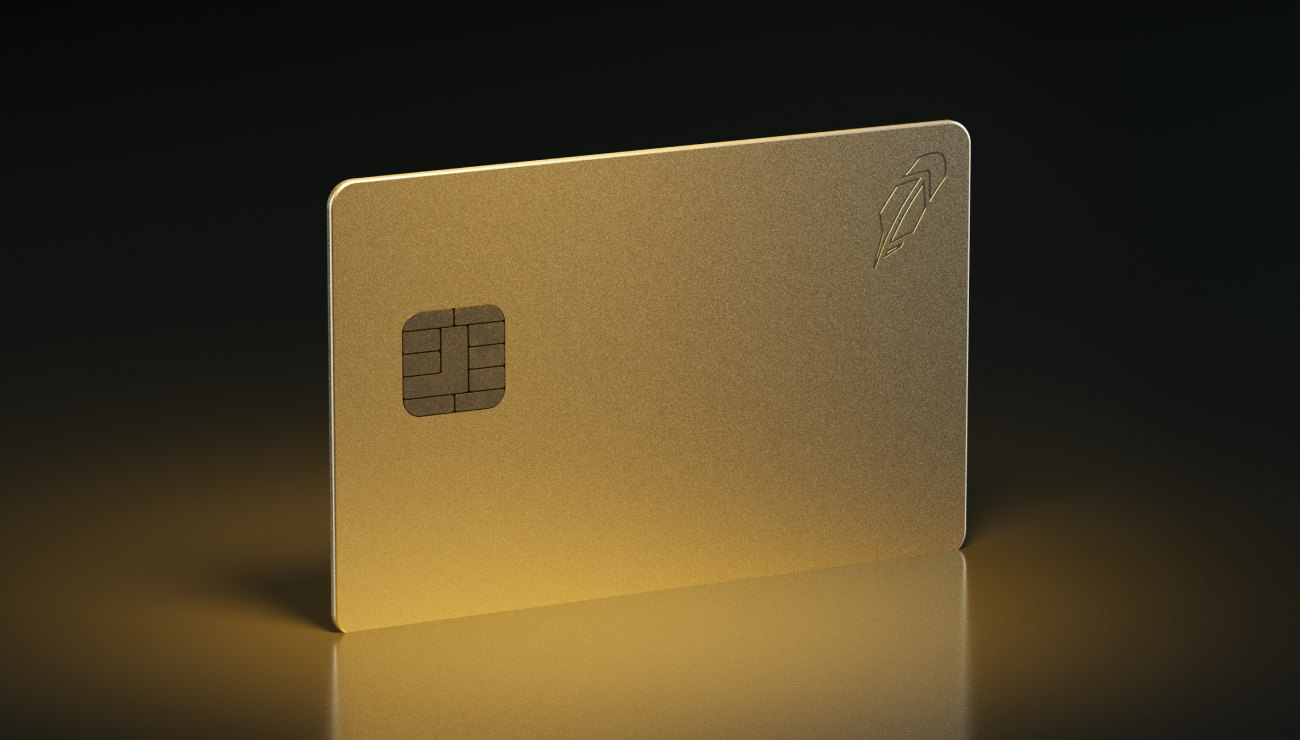
I picked up the Robinhood Gold Card last year after seeing people rave about its flat 3% cash back on all purchases. As someone who sees how card issuers model profitability every day, Robinhood's bet immediately piqued my interest — because a flat 3% on everything is borderline unprofitable for the issuer. Here's what I actually think after using it day‑to‑day as my current catch-all credit card and my analysis of its benefits.
The Margin Hack: How I "Delete" Most of the $50 Fee
Before I got the card, I didn't realize how much you can really maximize your Robinhood Gold membership. After exploring its margin feature, I realized it's the decisive factor that turns this subscription-based card into a profit generator.
Beyond the 3% cashback, you can statistically "hack" the subscription cost using the Gold margin benefit. Gold members get the first $1,000 of margin interest-free.
So with that knowledge, you can take that interest-free $1,000 and park it in a low-risk, high-yield ETF like SGOV (0-3 Month Treasury Bond ETF, ~3.53% 30-day SEC yield) or USFR (Floating Rate Treasury ETF, ~3.88% 30-day SEC yield), based on data from March 2, 2026:
- $1,000 × 3.7% ≈ $37/year in dividends.
- This effectively cancels out 74% of the $50/year Gold membership fee automatically.
By simply utilizing the interest-free margin provided, the 3% cashback on the card goes from "offsetting a fee" to "pure profit" much more quickly.
However, there is a catch and you need to keep what I say here in mind (please refer to this if you set up your account for margin):
To enable margin investing and use this strategy, you need to uphold a minimum account balance of $2000 or you risk a margin call (aka they will push to sell your stocks or charge you if your total account value falls below $2000). You also no longer get 3.35 APY on uninvested cash — so you need to move funds to SGOV or USFR immediately after transferring. For me, since I am using SGOV and USFR as cash proxies, this isn't an issue. If you do this strategy, I recommend keeping your cash in SGOV or USFR rather than a high-yield savings account since the returns are higher, are state-tax exempt, and you can safely pad your margin balance.
What's your real annual fee? Use the calculator:
Net Cost Calculator
See how your spending + the margin hack change the real price of Robinhood Gold.
3% cashback earned
$0
Margin dividend (~SGOV)
+$37
Gold fee
−$50
Real annual fee
$13
You'd need $434/yr (about $37/mo) in spending to fully offset the fee after the margin hack.
Insider note: This margin arbitrage strategy works because Robinhood is subsidizing the interest as part of Gold's value proposition. In the credit card world, we call this a "loss-leader stack" — the card loses money on interchange, and the brokerage cross-subsidizes with order flow and margin lending revenue on balances above $1,000. Enjoy it while it lasts.
But First: Why The Robinhood Gold Card?
The Robinhood Gold Card is a Visa credit card available exclusively to Robinhood Gold subscribers ($5/month or $50/year). The headline feature is 3% unlimited cash back on every purchase — no rotating categories, no caps, and no annual fee on top of the Gold subscription (which effectively becomes a $50/year card fee if you pay annually). This type of proposition is currently unheard of in the credit card industry, which raises a lot of eyebrows about the fine print. However:
The Rewards Are Genuinely Good
Uncapped, flat-rate 3% back on everything is hard to beat:
- It's a Visa with no foreign transaction fees, so it's usable everywhere vs many Mastercard and Amex backed cards
- 3% IRA match on contributions
- 3.35% APY on uninvested cash if not using margin (as of March 2, 2026)
- Larger instant deposits (meaning you are able to invest right away after submitting a deposit)
- Morningstar research and Level 2 market data
- $1,000 in margin interest-free
- Most flat-rate competitors top out at 1.5%–2% (Chase Freedom Unlimited, Citi Double Cash, Fidelity)
- Cards with higher rates typically lock them to specific categories like groceries or gas (Amex Blue Cash Everyday)
IRA Transfers & Roth Stacking
The match is straightforward but carries a cap: Robinhood gives 3% on whatever you deposit into an IRA, up to the annual limit ($7,500 in 2026). That includes your own dollars and any cashback you send in, so the total can’t exceed $7,500 for matching purposes.
- Add $7,500 of cash → get $225 bonus.
- You can drop your Gold rewards in your IRA to speed up this process (still qualifies for the 3% match)
Quantifying the advantage against 2% cards
| Annual spend | Gold 3% rewards | Flat 2% card | Net vs 2% card - annual fee |
|---|---|---|---|
| $5,000 | $150 | $100 | +$0 |
| $12,000 | $360 | $240 | +$70 |
| $24,000 | $720 | $480 | +$190 |
| $36,000 | $1,080 | $720 | +$310 |
Mathematically, once you cross the $5,000 annual spend mark (roughly $420/month), Robinhood Gold outperforms the majority of flat-rate cards after subtracting the annual fee. If you add IRA transfer matches and using free margin into Bond ETFs like SGOV or USFR like I explained earlier, the annual fee is negligible.
Things to Watch Out For
Cashback is in brokerage cash, not a statement credit. If you want to use rewards to pay your bill, you'll need to manually move the funds. |
No traditional signup bonus. Many competing cards offer large welcome bonuses that can be worth hundreds of dollars in the first year. |
Customer support is app‑based only. There's no phone support. For a credit card, that might matter if you have a dispute. |
Newer issuer. Coastal Community Bank and Robinhood's credit card program are relatively new compared to legacy card issuers. |
Waitlist and approval friction. Even for Gold members, the waitlist can take 3–6 months (or longer) with seemingly random invite orders. Approval is also surprisingly strict; reports suggest the issuer is highly sensitive to debt-to-income ratios and recent credit inquiries, leading to denials even for those with 800+ credit scores. |
Cash-like exclusions and "Fair Use". You won't earn 3% (or anything) on gambling, money orders, peer-to-peer transfers (like Venmo/CashApp), and specific tax payments. |
Value proposition risk. The 3% flat rate is a "loss leader" in the credit card world (most interchange fees are closer to 2%). Robinhood could "nerf" the value proposition by introducing monthly spend caps, increasing the Gold subscription fee, or reducing the base cashback rate if the program becomes unsustainable. |
My Verdict
For someone already using Robinhood — especially for Roth IRA contributions and utilizing margin — the Gold Card is a must-have card. The 3% flat rate removes all the mental overhead of optimizing spend across multiple cards.
If you're outside the Robinhood ecosystem, you'd need to weigh whether the Gold subscription brings enough standalone value beyond the card.
For me, the math checks out. In addition to Robinhood, I currently still use my Chase Sapphire Preferred card (5x Chase Travel, 3x dining, 2x travel, excellent point transfer partners) for their bonus categories, because hey, I do like eating out and traveling around the world too. Having the Robinhood Gold Card complements my travel card for all non-bonus categories on the Sapphire card.
Industry take on sustainability: The 3% rate is a customer acquisition play. Robinhood makes money from payment-for-order-flow, margin interest on balances above $1,000, and Gold subscriptions. As long as the average cardholder keeps a funded brokerage account, the economics work for Robinhood — but don't be surprised if terms tighten (spend caps, reduced rates on certain MCCs) within 18–24 months if adoption outpaces brokerage deposits. Lock in the current terms while you can.
Bottom line: Strong rewards card with a small subscription cost that's easy to justify if you're already a Robinhood user.
Do you think the 3% flat rate is sustainable long-term?
If you end up signing up, feel free to use my referral link – it helps me a bit and we both get the referral bonus as a result: https://join.robinhood.com/tristam712/ec_referral_v1/.
Competitive scoreboard
| Card | Flat rate | Key notes |
|---|---|---|
| Robinhood Gold | 3% everywhere | $50/yr fee, rewards hit brokerage; margin hack & IRA match make fee nearly vanish |
| Fidelity® Visa Signature® | 2% | No fee, deposit to Fidelity; lower rate but zero cost |
| Wells Fargo Active Cash® | 2% | No fee + occasional $200 bonus; maintenance-free cash back |
| Citi Double Cash® | 2% (1% buy + 1% pay) | No fee, simple structure; no ecosystem perks |
| Chase Freedom Unlimited® | 1.5% base (3% dining/drugstores) | Good for category spenders; weaker as a catch‑all card |
Every competitor injects variability—categories, caps, or lower base rates—while Gold keeps a straight 3% that compounds directly into your portfolio.
TL;DR for folks skimming
- 3% flat is rare; most cards top out at 2% or tie rewards to categories.
- Break-even spend ≈ $140/mo once you use the margin hack; above that you're earning net reward money.
- That $50 fee is mostly gone: $37 from free-margin dividends plus the 3% rewards turn it into profit quickly.
- Bonus extras matter: 3% IRA match + 3.35% APY (if not using margin) stack on top of everyday spend for real yield.
Is the Robinhood Gold Card a trap? Frequently asked questions
Is the Robinhood Gold Card worth it for low spenders? If you spend at least ~$140/month and use the free margin on SGOV/USFR, the subscription effectively pays for itself. Below that, you're better off with a no-fee 2% card.
Robinhood Gold Card vs. Fidelity Visa — which is better? Fidelity gives 2% unlimited with zero fee. Robinhood gives 3% for $50/year. At ~$5,000/year in spend, the extra 1% ($50) covers the Gold fee. Above that, Robinhood wins — plus you get the IRA match and margin perks.
How do I offset the Robinhood Gold fee with margin? Enable Gold margin, use the interest-free first $1,000 to buy SGOV or USFR (yielding ~3.5–3.9%), and collect ~$37/year in dividends to cover 74% of the fee automatically.
Can Robinhood nerf the 3% rate? Yes. The 3% flat rate costs Robinhood money on every swipe — interchange is typically 1.5–2.2%. They're banking on brokerage deposits and order flow to offset the loss. If adoption runs too hot without matching deposits, expect spend caps or category exclusions. Use it while the terms are generous.
Like this kind of breakdown?
Sign up for updates — no spam, no affiliate fluff, just helpful notes like what you just read above.